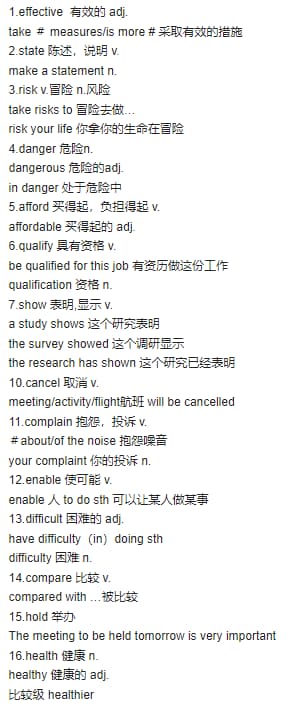
英语A级笔记
V-doing
[]表示可要可不要
动词:
admit<允许> apprecicate<欣赏>,avoid<避免>
consider<考虑> delay<耽误> dislike<不喜欢>
enjoy<喜爱> escape<逃避> excuse<原谅>
finish<完成> imagine<设想> keep<保持>
mind<注意> miss<错过> practice<练习>
risk<使…遭受危险> suggest<建议>
词组:
feel like<想要> can't help<情不自禁>
can't stand<无法忍受> give up<放弃>
go on<继续> get dowm to<静下心做某事>
keep on<继续做某事> insist on<坚持>
look forward to<盼望> put off<推迟>
prefer doing sth to doing sth<更喜欢走某事>
devote to<致力于> stick to<坚持>
speed some time<花时间>
object to<反对> thank you for<感谢>
be busy<忙于> be used to<习惯于>
be interested in<有兴趣>
have difficult/trouble [in]<做某事有困难> have fun<很开心>
have problems<做某事有问题>
stay up all night doing sth<熬夜做…>
succeed in doing sth<成功地做某事>
特殊:
be worth + [n] + doing<值得做某事>
advise/allow/forbid/permit doing sth<建议/允许/禁止/允许做某事>
V-to do
want<想要> would like<愿意> agree<同意>
refuse<拒绝> decide<决定> plan<计划>
expect<期望> hope<希望> wish<但愿>
begin/start<开始> choose<选择> offer<提出>
ask<要求> learn<学会> mean<打算>
intend<想要>
v-doing/v-to do
forget to do sth<忘记做某事> forget doing sth<忘记已经做过某事>
注1:前者意思是 忘记要去做某事,指这件事情本来要做,但是忘记了而没有去做 后者意思是 忘记做了某事,指这件事情本来做了,但是忘记了而以为没做
remember to do sth<记住去做某事> remember doing sth<记得曾经做过某事>
stop to do sth<停下来接着去做另一件事> stop doing sth<停止做某事>
mean to do sth<企图做某事> mean doing sth<意味着做某事>
go on to do sth<做完某事接着去做另一件事> go on doing sth<继续做同一件事>
try to do sth<试图做某事> try doing sth<尝试着做某事>
can't help to do sth<不能帮助做某事> can't help doing sth<情不自禁做某事>
hate to do<不喜欢马上去做某事> hate doing sth<平常不喜欢做某事>
require sb/sth to do sth<要求某人/某物做某事> require doing sth<需要做某事>
注1:require doing sth=require to be done<需要被做>
V+sb+to do sth
``advise/allow/forbid/permit sb to do sth`<建议/允许/禁止/允许某人做某事>
would like sb to do<愿意某人去做某事>
like sb to do sth<喜欢某人去做某事>
want sb to do sth<想要某人做某事>
wish sb to do sth<但愿某人去做某事>
except sb to do sth<期盼某人去做某事>
encourage sb to do sth<鼓励某人去做某事>
ask sb to do sth<要求某人去做某事>
tell sb to do sth<告诉某人去做某事>
get sb to do sth<使得某人去做某事>
invite sb to do sth<邀请某人去做某事>
特殊结构
make sb do sth<让某人去做某事>
let/have sb do sth<让某人做某事>
help sb [to] do sth<帮助某人去做某事>
其他结构
stop sb from doing sth<阻止某人做某事>
stop sb doing sth<阻止某人做某事>
keep sb doing sth<让某人一直做某事>
keep sb from doing sth<阻止某人做某事 >
get sth done<让某事被做>
连词
although<尽管;居然> till<直到>
unless<除非> because<因为>
before<在…之前> while<当…时候>
as<在某事发生的同时> if<如果>
until<直到…才> as if<似乎;好像>
ever sine<自从> in case<万一,假设>
even though<虽然,即使> now that<既然;由于>
if only<要是;只要> in order that<为了>
as soon as<一…就…> sine<自…以来>
it is necessary/important for sb to do<对某人来说做某事是很有必要的>
句子有表示否定意思一般选择unless
固定搭配
be named after<以…命名>
have difficulty(in) doing sth<做某事有困难>
情态动词(can,cannot,may,need...) + V
the+比较级<越…越…>
depend on<依靠,依赖>
unable to<不能胜任的>
It is/was not until+强调部分+that+其他部分<直到…才>
介词+n/ing(只要是接动词,要ing形式,注意是不是被动,被动形式:being done)
注1:常见介词:in,on,with,by,for,at,about,under,of,before,after...,a,an,the不是介词!是定冠词
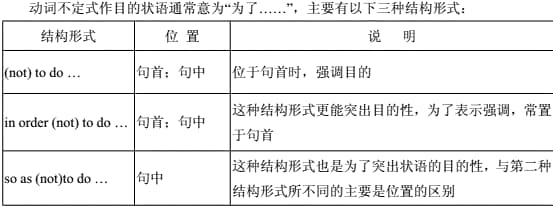
by the time<到...时候>出现,谓语动词需要用将来完成时 —例—By the time of you get to the office, I will have prepared all the documents for the meeting.
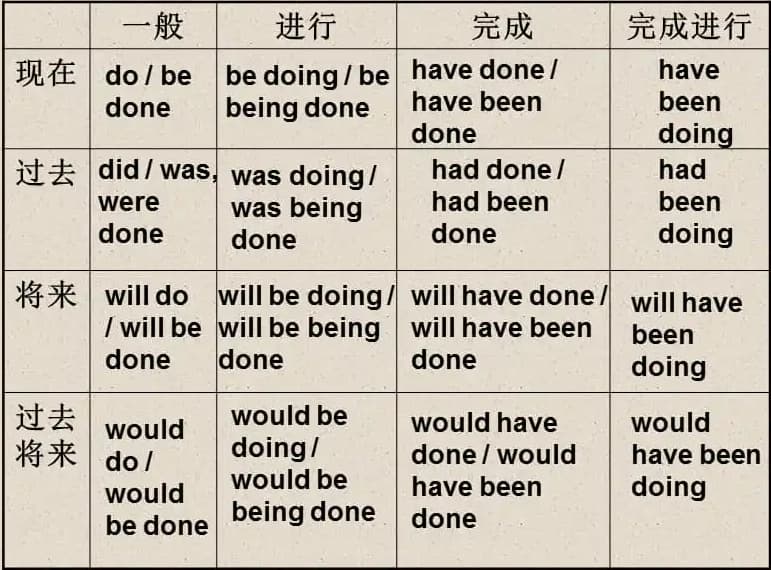
注1: 谓语和非谓语 的区别是看有没有时态;谓语有时有态,非谓语无时有态(谓语动词 = 时间助动词 + 非谓语动词(状态主动词))
注2:非谓语动词也是动词,但不能作谓语,只能作主语、表语、宾语、补语、状语、定语;非谓语动词又分为 动名词、不定式和分词:
1.不定式(to do):做 主语、宾语、表语、定语、状语和补语。
2.动名词(doing):做 主语、宾语、表语、定语。
3.现在分词(doing):做 表语、定语、状语和补语。
4.过去分词(done):做 表语、定语、状语和补语。
注3:时态指 行为动作发生的时间和 发生时所呈现出来的状态,一共 16种时态
contribute to ...<对…贡献>
spend time doing sth<花时间做某事>
cut out<切断;删去> cut into<打断;侵犯> cut down<减少;降低> cut through<穿透;穿过>
十三字口诀: “主将从现,主过将从过,主现从现",即 主句是一般将来时, 从句用一般现在时; 主句用过去将来时, 从句用一般过去时;当 主句中有can/can’t的话,则 从句用一般现在时
have affect on sth<对…产生影响>
特殊疑问词+不定式
注1:疑问词部分包括疑问代词 who,whom,what,which, whose 以及疑问副词 when,where,how。此外,连接词 whether 也适用。
注2:why 后不直接跟动词不定式,但它可以接不带to的动词不定式,即动词原形,构成 why do sth/why not do sth
not only...but [also]...<不但…而且…>
注1:用来连接两个主语时,谓语动词的 单、复数 遵循 “就近原则”,即和 but (also) 后的 名词或代词的数 一致
主句主谓宾齐全,应用不定式做后置定语
on average<平均上,平均来看>
should+be动词V
to some degree<在某种程度上>
the+名词<表示特指的事物> --例-- the old<老人>
too+adj/adv+to do<太…以至于不能…>
have sth done<让…被做…>
either...or...<要么…要么…>
neither...nor...<既不…也不…>
whether...or...<不管…还是…>
enable sb to do sth<使某人能做某事>
under the impression<以为/觉得>
be likely to do sth<有可能做某事>
schedule sth to happen<计划做某事>
suffer from<来自…的折磨>
have an impact/effect on<对什么产生影响>
the same...as...<与…同样>
There be+名/ing
注1:There be句型中be动词的 单复数 形式由 后面挨近的一项的单复数决定
under control<处于控制之下>
注1: under control是 被动语态, in control是 主动语态
with the work done<随着工作的完成>
in order of<按照顺序>
leave preparation at the last minute<最后一分钟准备离开>
focus on +名词<专注于>
will+V(情态动词后面都是加V)
__ ,完整句子.(横线一般填副词)
in my opinion<在我看来>
so far as i know<据我所知>
Compared一般放在句首,Compared with<相比之下>
worry about<担心>
have access to<接近,利用>
it is common practice to do<通常的做法是>
to be 表示将来
放在主句末尾一般是副词
hardly+when搭配
make it possible/impossible to do sth<让…成为可能/不可能>
come up with<提出>
定语从句
- 如果一个句子有多个谓语,那么这个句子可能是
并列句或者复合句。如果有并列连词就是并列句,没有就是复合句。复合句分为:定语从句,状语从句,名词性从句
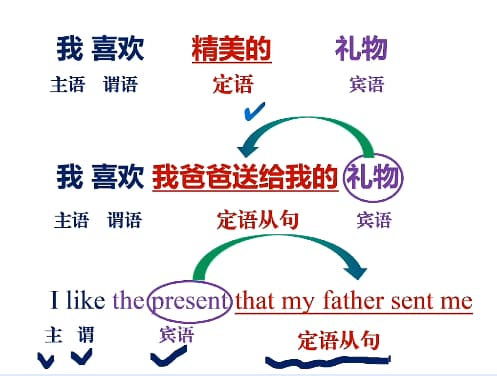
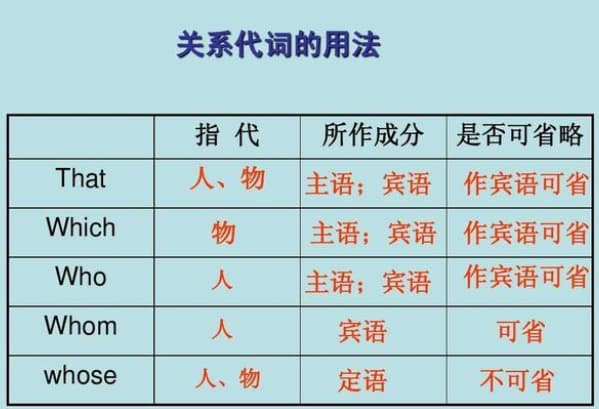
核心就是抓 先行词,观察先行词在从句中充当什么位置。如果在 主语或者宾语 就用 which或者 who, 状语就使用 介词+which,或者 where,when,why。表达 从属的时候用到 whose, that可以替代which和who,whom用在先行词在从句中做宾语,注意what不是引导宾语从句的!
注1:the reason that+具体原因,that实际上引导了一个同位语从句,说明reason的内容
–例–The reason that he got stuck in the traffic is so bad.<那个他堵在路上的理由太烂了>
the reason why+理由的修饰,why实际上引导了一个定语从句
–例–The reason why he was late is that he got stuck in the traffic.<他迟到的原因是他堵在路上了>
注3:先行词前面有 , 一般是非限定性定语从句,只有 which能修饰整一个句子(that不能用于非限定定语从句!)
注4:先行词是 唯一的:that
–例–The rabbit ate the largest carrot(最大的胡萝卜) that I’ve ever seen.
下面这些情况只能用that:先行词是all,only,first,all,little,much,few,anything,nothing,something,none,the one ;先行词被 any,few,little,all,no,the only,the very,the same,the last 修饰时; 先行词既有人又有物时;当句中已有who时
引导词只用 which 不用 that 的情况:1.非限定性定语从句;2.在 介词+关系代词引导的定语从句中;3.当关系代词后面有插入句时(–例–Here is the CD which, as I have told you, is of a great help to you.);4.先行词是that时;
引导词用 who 不用 that 的情况:1.先行词为 those,one,ones,anyone,people 等时;2.先行词后有 较长的后置定语时,或 定语从句被分隔时(–例–A teacher will come tomorrow, who will teach you English.)
先行词 多选一:which
–例–The rabbit ate a carrot which/that I bought.
注5: way 和 time 后的定语从句的引导词
(1) way 作先行词,意为 “方式,方法”时,引导词在从句中作状语,可用 that/in which 引导, 也可省略;若引导词作从句的主语或宾语,用 that/which 引导。 引导词作宾语时可省略
I have thought of a good way ( that/in which ) we can conduct the experiment successfully.
<我已经想出了一个我们能成功地进行这个实验的好方法。>
This is the very way ( that/which ) we need to test the theory.
<这正是我们需要的用来检验这条真理的途径。>
(2) 先行词是 time 时,若表示 次数,应用 that,that 可省略;若表示 一段时间,则用 when 或 “at/during +which”引导。
I could hardly remember how many times (that) I’ve failed.
<我几乎记不清我已失败过多少次了。>
He lived in a time when/ during which there were no computers.
<他生活在一个没有电脑的时代。>
名词从句
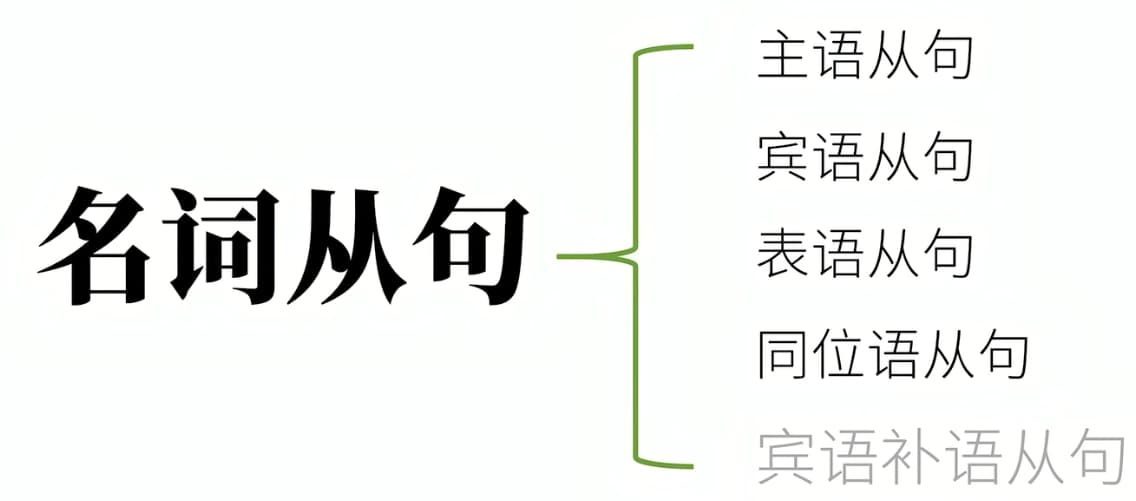
主语从句
- 以
引导词开头!!! that引导的主语从句whether / if引导的主语从句
注1: whether 引导的主语从句可置于 句首,但由 if 引导的主语从句不能置于句首,只能放于 句末
wh-类连接词引导的主语从句“疑问代词+ever”引导的主语从句- 必须用
it先行的情况:1.在“It+be+过去分词(said,reported,thought,expected,believed,suggested,decided,known 等)+ that从句”中;2.主句是疑问句或感叹句时;3. 主句谓语动词是appear,seem,turn out,happen,occur,follow等时;4.在“It + be + 形容词(obvious,true,natural,good,possible,likely,certain,probable 等)+ that 等连词引导的从句”中;5. 在“It + be + 名词词组(no matter,an honor,a pity,no surprise 等)+ that从句”中;6. 在“It + doesn't matter(makes no difference 等)+连接代词或连接副词引导的主语从句”中。
宾语从句
-
that引导的宾语从句,that常省略;如果从句的句子成分完整,使用从属连词that引导;如果缺失句子成分,使用相对应的关系代词或关系副词引导I thought (that) you had read the book.
<我还以为你读过那本书呢。>
-
whether/if引导的宾语从句I doubt whether he will succeed.
<我怀疑他是否会成功。>
-
wh-类连接词引导的宾语从句一般情况下介词后只能用 wh-类连接词引导宾语从句。
We are talking about whether we admit students into our club.
<我们正在谈论是否让学生加入我们的俱乐部。>
-
“疑问代词+ever”引导的宾语从句The club will give whoever wins a prize.
(whoever=anyone who)
<俱乐部会给获胜的一方发奖。>
-
宾语从句可作
某些介词的宾语He is pleased with what we did yesterday.
<他对我们昨天做的一切感到很满意。>
-
如果宾语从句后有
宾语补足语,要用it作形式宾语,而将从句放到补足语后。I think it necessary that we take plenty of hot water every day.
<我认为每天多喝开水是有必要的。>
-
形容词后接宾语从句常接宾语从句的形容词有
sure,certain,please,happy,sorry,glad,afraid,satisfied,surprised等。I am sure I will pass the exam.
<我确信我会通过考试。>
-
不可省略that的宾语从句
(1) 当 that从句与主句谓语动词之间有 插入语时。
When he got England, he found, however, that his English was too limited.
<然而,当他到英国时,他发现他的英语很有限。>
(2) 当that从句与另一名词性从句 并列作宾语时。
Everyone knew what happened and that she was worried.
<人人都知道发生了什么,也知道她很着急。>
(3) 当介词 except,but 等后跟宾语从句时。
His composition is good except that there are some spelling mistakes.
<他的作文不错,就是有几个拼写错误。>
(4) 当宾语从句紧跟在 间接宾语后时。
My father advised me that I should pay more attention to my study.
<爸爸建议我要更加注重学习。>
(5) 当 it 作形式宾语时。
We have made it clear that we will learn to deal with various difficult problems.
<我们已表明我们将会学会处理各种问题。>
(6) 当宾语从句位于 句首时。
That our team will win, I believe.
<我相信我们队会赢。>
及物动词后+宾语从句,只有 what 适合引导宾语从句
一般疑问句+宾语从句
表语从句
-
that引导的表语从句that 只起
连接作用,不作任何成分,但是不能省略。The trouble is that I have lost his address.
<麻烦的是我弄丢了他的地址。>
-
what 引导的表语从句
The girl is not what she was ten years ago.
<这个女孩已经不是10年前的她了。>
-
where,why,when,because,how,whether等词引导的从句常作表语,表示地点、原因、时间、方式、判断等。This is where we found the strange trees.
<这是我们发现奇怪的树的地方。>
-
主语是
reason时,表语从句常用that引导The reason for his absence is that he was ill.
<他缺席的原因是他生病了。>
-
as,as if有时引导表语从句Things were not as they seemed to be.
<事情并不像看上去的那样。>
【注意】 如果主句的主语是 idea,advice,suggestion,order 等名词时,则表语从句的谓语应用 虚拟语气,即 “(should) + 动词原形” should可省略。
His idea is that we (should) spend the weekend in the nearby holiday camp.
<他的想法是去附近的度假营过周末。>
同位语从句
that引导的同位语从句
He expressed his hope that he would visit China again.
<他表达了想再次访问中国的愿望。>
whether引导的同位语从句
I have no idea whether she’ll come or not.
<我不知道她是否来。>
- 连接代词
what,who、连接副词how,when,where等词引导的同位语从句
It is a question how he did it.
<那是一个他如何做了此事的问题。>
【注意】同位语从句与定语从句的区别:
从句中的关系词 that前的名词是 idea,fact,thought,news等名词,后面的从句说明其内容时, 从句是同位语从句,that不可省略;关系词that在从句中 充当主语、宾语、表语等句子成分时, 从句是定语从句,that可省略。
The news that he will leave for Guangzhou is true.
<他将要去广州的消息是真的。>(同位语从句)
The suggestion that Mr. Wang gave is very important for us.
<王先生的建议对我们来说是非常重要的。>(定语从句)
难点
whether 和 if的区别
(1) 引导 主语从句并且 置于句首时只能用 whether
Whether the meeting will be put off has not been decided yet.
<是否推迟会议还没有定下来。>
(2) 引导宾语从句作 介词的宾语时,一般用 whether
It all depends on whether they will come back.
<一切都取决于他们是否回来。>
(3) 引导 表语从句时只能用 whether
The question is whether they have so much money.
<问题是他们是否有这么多钱。>
(4) whether 可以引导 同位语从句,用以说明前面的名词的内容, if 则不能。
We ought to discuss carefully the question whether we can do it or not.
<我们应认真讨论我们是否能做这件事。>
(5) 后面直接跟 or not 时用 whether 。
I didn’t know whether or not he had arrived in Guangzhou.
<我不知道他是否已到了广州。>
(6) 其后跟 动词不定式时用 whether
I have not decided whether to go or not.
<我还没决定是否去。>
- 名词性从句部分的语序
名词性宾语从句的语序和一般陈述句相同,即陈述句语序。
Do you know where Tom lives?
<你知道汤姆住在哪里吗?>
doubt与sure后的引导词
(1) doubt 用于 肯定句时,其后的名词性从句用 whether/if 引导;用于 否定句或疑问句时用 that引导。
I doubt whether/if she will call me soon.
<我怀疑她是否很快给我电话。>
I don’t doubt that she will call me soon.
<她很快会给我打电话,我毫不怀疑。>
(2) be sure 引导的句子用于肯定句时,后面的名词性从句用 that 引导;用于否定句或疑问句时用 whether/if 引导。
I’msure that she is right.
<我确定她是正确的。>
I’m not sure whether/if she is right.
<我不确定她是否正确。>
状语从句-时间状语从句
什么是状语?状语表示动作发生的时间,地点等
词意:wherever<无论什么地方>;whatever<无论什么>(后接n);however<不管怎么样>(可修饰adj/adv);whenever<无论何时>;sine<因为>;while<虽然,尽管>;until<直到>;if<如果,是否>;even though<虽然,即使>;so long<再会,好久>;as long as<只要>;as much as<和…一样多>
while引导的短语中,主动关系用现在分词形式(ing)现在分词形式做状语修饰前面整个句子- 在
while引导的从句中,当从句的主语与主句的主语一致时,且从句中有系动词时,可以省略从句中的主语与系动词。(while+doing)
when,while,as引导的时间状语从句
when 既可以指 某一时间点,也可以指 某一段时间,when 从句的谓语动词可以在主句谓语的动作之前、之后或同时发生。while 强调一段时间,所以从句的谓语动词通常是延续性的;as 强调主句和从句的动作相并发生,常可译为 “一边……一边……”
Tom pretended to be deaf when I spoke to him.
<当我和汤姆讲话的时候,他假装耳聋。>
While he was doing his homework, his mother was cooking.
<他做作业时,他的妈妈在做饭。>
They talked as they walked along the river.
<他们沿着河边一边走一边说话。>
before引导的时间状语从句,如果主句的主语与从句的主语相同,则从句的主语可省略,谓语动词用现在分词形式
(1) " It+be+时间段+before" 意为 "……(之后)才”
It was a long time before I got to sleep again.
<过了很久我才睡着。>
(2) "It not be+时间段+before" 意为 ”不久就;要不了……就会“
It won’t be long before we take the final exam.
<不久我们就要期末考试了。>
since引导的时间状语从句
since 引导的时间状语从句所表示的基本意思是 ”自……以来“;主句可以是现在完成时/现在完成进行时
I have been looking forward to seeing you since I saw you last.
<自我上次见到你以来我就一直想见到你。>
He has written to me frequently since I was ill.
<自从我病愈后,他屡次给我写信。(从句谓语为状态动词)>
He has written to me frequently since I fell ill.
<自从我生病以来,他屡次给我写信。(从句谓语动词为终止性动词)>
【注意】
在 " It+be+时间段+since " 句型中,be 动词 常常是 is (=has been ) 或 was (=had been ),since 从句中的动词是 一般过去时(使用最多)、 过去完成时或 现在完成时;在 "It+be+时间段+before " 句型中,be 动词使用 was 或 will be,before 从句使用 一般过去时或 一般现在时。
It is a week since he left/has left.
<他离开一个星期了。>
It was a week before he left.
<过了一个星期他才离开。>
till和until引导的时间状语从句
till 和 unil 词汇意义相同,不过 till 不用于句首,不如 until 正式。
(1) 用在肯定句中,表示 ”一直到;到……为止。一般来讲,在这种用法下,主句的动词必须是 延续性动词。
He waited until I return.
<他一直等到我回来。>
(2) 用在否定句中,表示 “到……才”,主句的动词通常是 非延续性动词。
As a matter of fact, I did not begin work until he had gone.
<事实上,直到他走了我才开始工作。>
(3) "not...until" 的 倒装句型和 强调句型。
“not…until" 的倒装句型:如果否定词置于句首,句子要采用倒装形式。
Not until we know more will we be able to improve the situation.
我们只有了解了更多的情况,才能够改善现状。
“not until” 的强调句型是 “It is/was not until...+that从句"
It was not until I had read your letter that I understood the true state of affairs.
<直到我读了你的信,我才明白了事情的真实情况。>
every time,each time,the first time,the last time,next time等表示时间的名词也可以引导时间状语从句。
Each time she came to Guangzhou, she would call on me.
<她每次来广州,总是来看我。>
by the time引导的时间状语从句
在一般情况下,如果 从句的谓语动词用一般过去时, 主句的谓语动词用过去完成时; 如果从句的谓语动词用一般现在时, 主句的谓语动词用将来完成时。注意:将来完成时一般表示形式:will have done(可以用shall代替)
By the time you come here tomorrow, I will have finished this work.
<你明天来这儿的时候,我将已经完成此工作了。>
- 表示
”一……就……“的连接词
常用的表示 ”一……就……“的连接词有 the moment, the minute, immediately, directly, hardly ... when/before, scarcely ... when/before, no sooner ... than, as soon as等。
I’ll tell him the minute (that) he gets here.
<他一到这儿我马上就告诉他。>
【注意】
hardly,scarcely,no sooner 位于句首时,句子要用 倒装
Scarcely had she gone out when it began to rain.
<她刚出门就下雨了。>
地点状语从句
- 地点状语从句
引导地点状语从句的常用词有 where,wherever等。地点状语从句相当于 to/in/from the place(s) where ... 或 to/in/from any place where ... 结构。
We live where the road crosses the river.
<我们住在河流与街道交叉的地方。>
He must go wherever we send him.
<他必须去我们要他去的任何地方。>
- 地点状语从句与定语从句的转化
一般只要在地点状语从句的引导词 where 或 wherever 前加上 to/in/from the place(s) 或 to/in/from any place,便可变为 定语从句。
前面出现过的带有地点状语从句的句子可改为下面带有定语从句的句子,意思不变。
We live in a place where the road crosses the river.
He must go to any place where we send him.
让步状语从句
no matter how<无论怎么样>+形/副
no matter when<无论什么时候>+句子
no matter whether<不论是否>+句子
no matter what<无论是什么>+名/句子
no matter which<无论哪一个>
上面的可以替换成 however/whenever/whatever/whichever,没有whetherever这种写法!
主谓一致原则
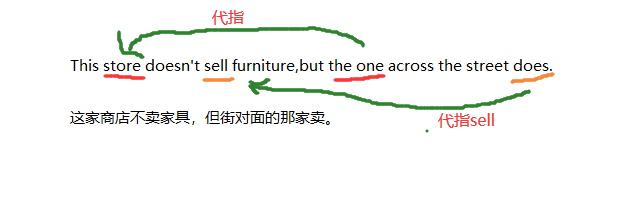
主动/被动
- 如果主语是动作的执行者,或者说动作是由主语完成的,要用
主动语态。 - 如果主语是动作的承受者,或者说动作不是由主语而是由其他人完成的,则用
被动语态。 情态动词的被动语态,其结构为“情态动词+助动词be+及物动词的过去分词”;否定形式时在情态动词后面加not
注1:情态动词有 can (could)、 may (might)、 must、 need、 ought to、 dare (dared)、 shall (should)、 will (would)
比较级/最高级
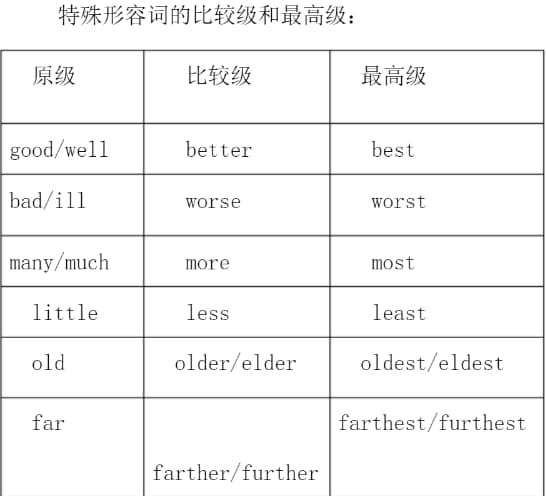
时态
介词定语:就是放在介词后面的 名词,名词短语(一般加ing)
注1:现在完成时的基本结构:主语+have/has+动词的过去分词
from today 表示谓语要用一般将来时
虚拟语气
- 与过去相反:
if had done,would have done - 注意那个
were,如果选项有was,还是选were,虚拟语气不分单复数
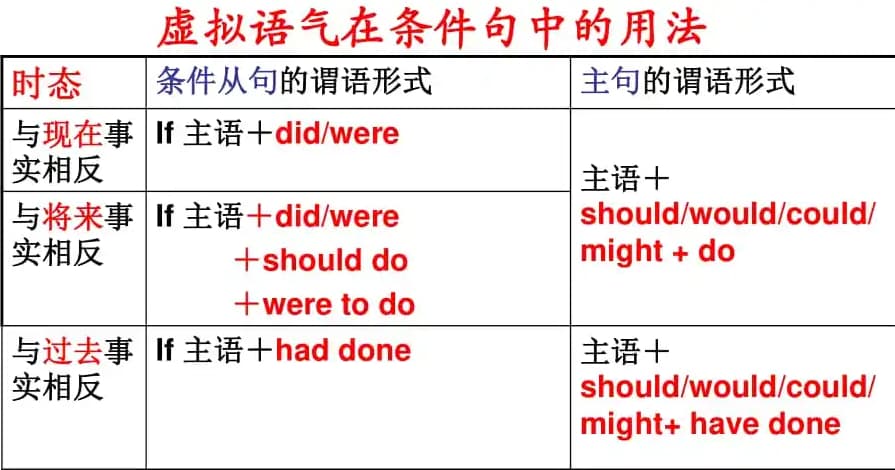
have done:现在完成时
had done:过去完成时
在 insist<坚持>,demand<要求>,propose<提议>的宾语从句中,从句谓语要用 should + V来表示虚拟语气(should可省略)
分词
注1:现在分词做 定语,状语,补足语,表主动,进行(主动用现在分词做后置定语);过去分词表被动,完成(被动用过去分词做后置定语)
当 形容词修饰 some-,any-,every-,no-,-body,-thing等构成的不定代词时,须放在不定代词 后做后置定语
- 分词短语在句中作原因状语时,相当于一个原因状语从句。与时间状语一样,也要注意分词所表
示的动作与谓语动作的先后关系。当分词所表示的动作与谓语动作同时发生或几乎同时发生时,用分词的一般形式。此时分词的逻辑主语须是句中的主语。这样的原因状语可以换成because, as引导的原因状语,该从句谓语动词用一般过去时。
Not knowing how to work out the difficult physics problem, he asked the teacher for help.
<因为不知道如何解这道物理难题,他求助老师。>
= Because he didn’t know how to work out the difficult physics problem, he asked…help.
当分词表示的动作发生在谓语动作之前,可以用现在分词的完成式在句中作原因状语,其逻辑主语须为句中的主语,该短语的作用相当于一个原因状语从句。该从句的谓语动词须用完成时。如:
Having lived with the girl for 5 years, we all know her very well.
倒装
出现 only位于句首,需要 部分倒装
全部倒装:位于动词提前至主语之前
部分倒装:助动词或情态动词提至主语之前,谓语动词位置不变(助+主+谓)
否定词提前倒装,否定词用于句首时,句子应进行部分倒装: Not only…(but also), Not until<直到……才>, No sooner….(than)<一……就>, Never/ Rarely/Seldom, Hardly/Scarcely, Few/Little, Neither/Nor <也不>, At no time, Under no circumstances<决不>, On no account <决不>, In no way,其中 not only, no sooner, hardly, scarcely 分别和 but (also), than, when搭配使用,需注意: 后一组词之后的部分不进行倒装, 只有否定词之后的部分倒装
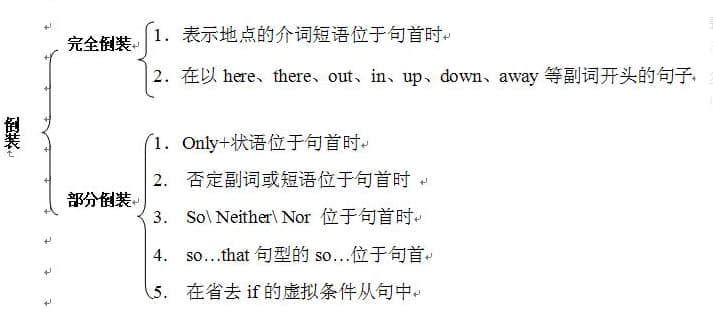
no sooner(完成时)...than(过去时)
so位于句首,需要部分倒装
词性转换
met(personal)personally<空格应填副词来修饰动词>
expand(cooperate)cooperation<及物动词后+宾语>
注1: 宾语:名词,代词,数词,动词不定式,动名词,从句,the+形容词,the+过去分词
注2:过去分词:一般是动词+ed 组成,不规则动词的过去分词见不规则动词表
注3:加 ing都修饰物,加 ed的都修饰人
I am surprised to learn/It is not surprising
注4:及物动词是动词的一种,它所表示的动词常涉及动作者以外的事物,如: 吃,穿,读,写等。"及物"说明需要带"物"来完成一个动作,这个动作是有对象的,这个对象就是它后面要加的宾语。一般后面可直接加宾语的及物动词有被动形式
注5:不及物动词: 后面不能直接加宾语,意思已完整。 一般要先加介词再接宾语
any+名词
连接词 and前是名词短语,提示后面也是名词
be+形容词(一般情况下)
air(pullute)pullution,构成名词词组
her/your+名词(hers/yours不需要加名词,因为本身已经包括了),she+动词/系动词
动词与动词之间用to
注6:副词修饰形容词/动词 形容词修饰名词,不可修饰动词 动词只能被副词修饰 名词不能修饰任何词,它只能被其他词修饰 冠词修饰名词 定语修饰,限定,说明名词或代词的品质特征
注7:形容词+名/代 名词后面一般不加词 副词在前,形容词在后;动词在前,副词在后(不一定,反正很近)
其他
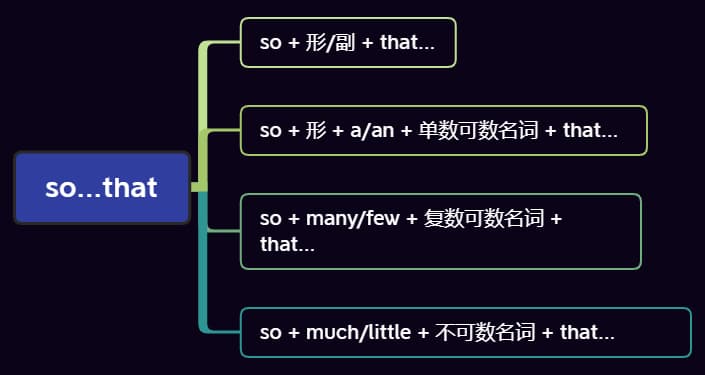
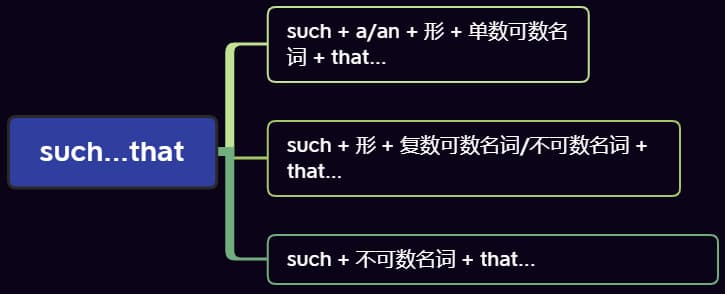
so 形 that;such 名 that
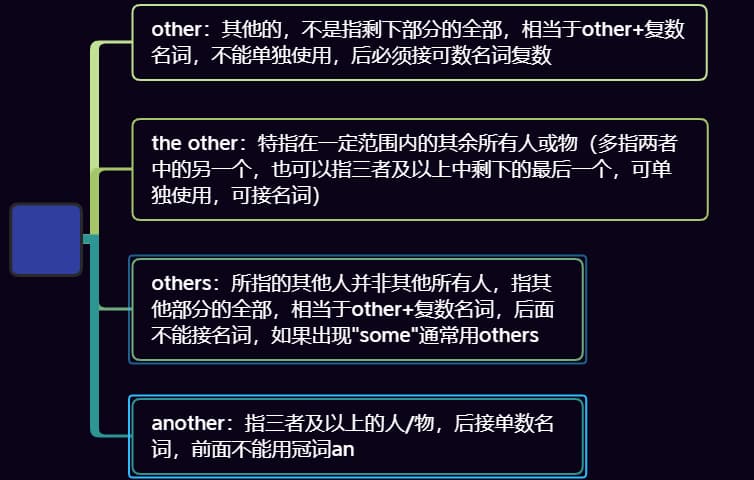
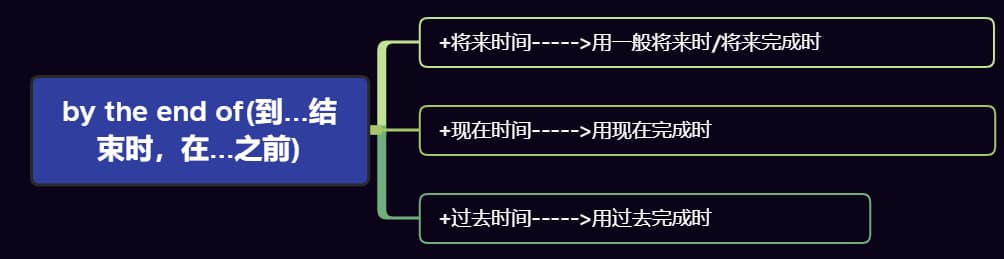
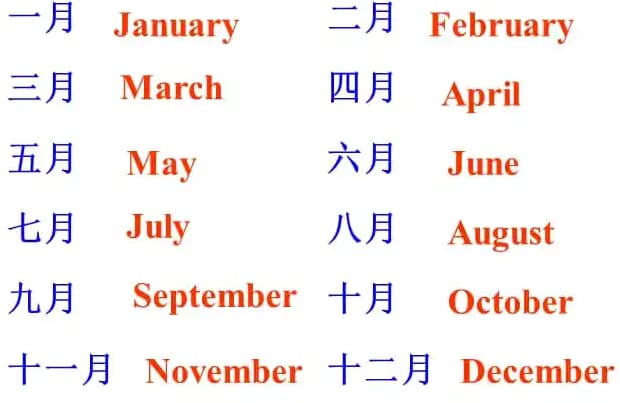
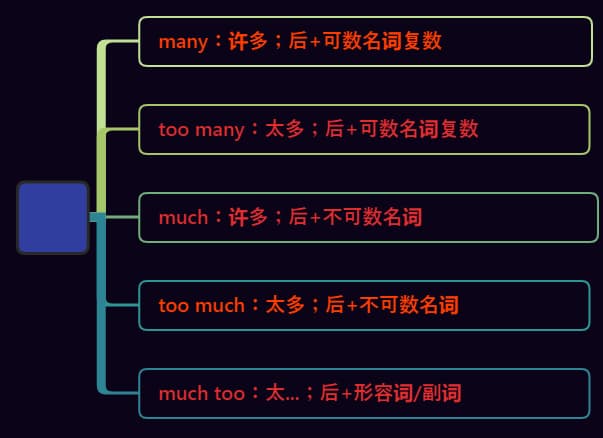
规则表
形容词变副词
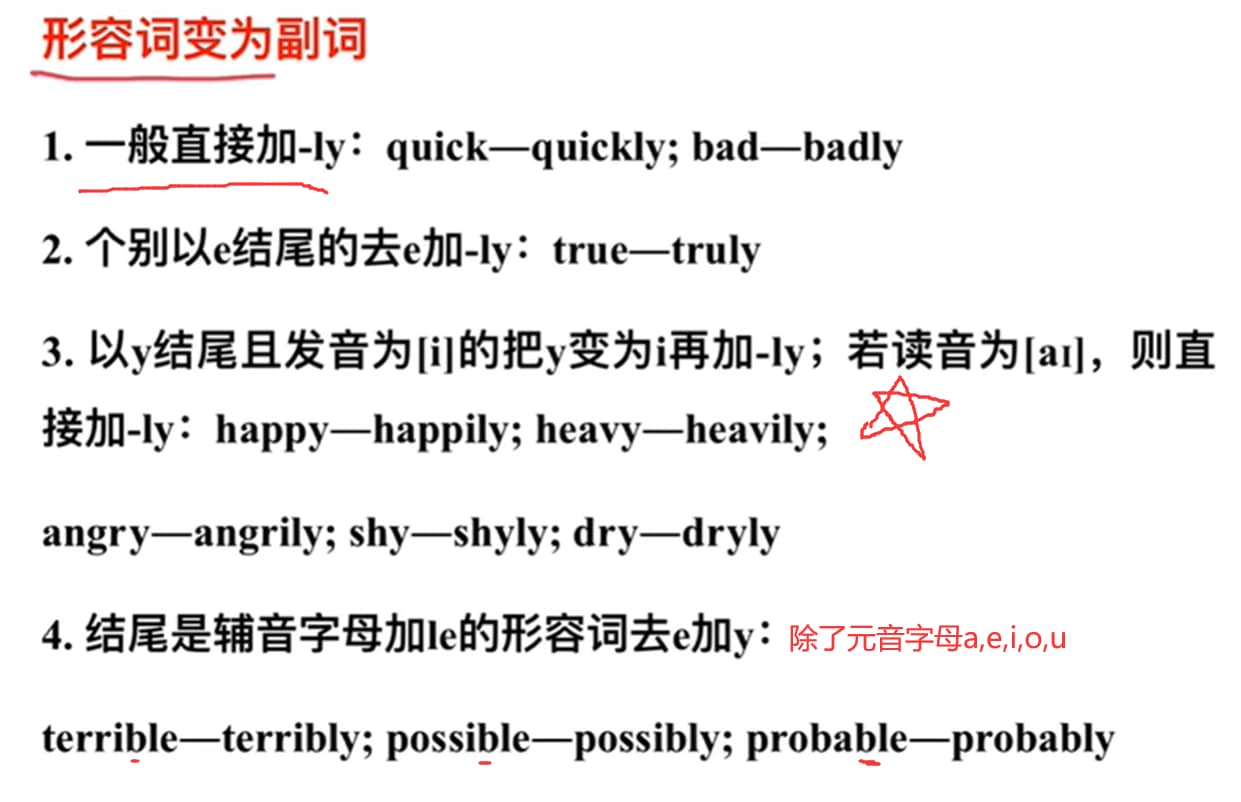
个别以e结尾的去e+ly的有: true-truly<真实地> gentle-gently<文静地,温柔地> possible-possibly<可能地> polite-politly<有礼貌地> wide-widly<野生地,野蛮地>
本身是形容词又是副词的有: late <晚的,迟到>
early< 早的,早到> fast< 快的,迅速> well <身体健康的好是形容词;好地> hard <坚硬的(形容词);努力地(副词)> high <高的,高地>
名词变形容词
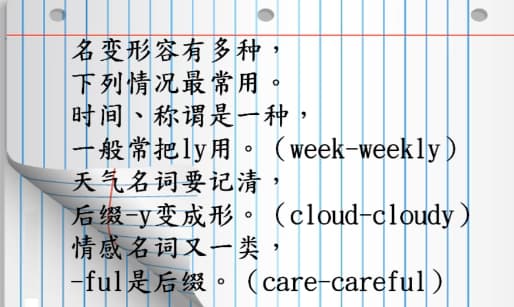
- 如果名词以
重读闭音节结尾,且词尾只有一个辅音字母,这时应双写词尾的辅音字母再加-y(如:sun—sunny,fun—funny等) - 少数以不发音的
e结尾的名词变为形容词时,应去掉e再加-y(如:noise—noisy,ice—icy等) 一些抽象名词在词尾加-ful可以变为形容词(care—careful,thank—thankful,help—helpful,use—useful,beauty—beautiful等)- 在名词后加
-ous变为形容词。(如:danger—dangerous等) - 加
-less<否定意义>(如:care—careless,use—useless,hope—hopeless,home—homeless等) - 加
-able<通常是形容词> - 一些以
-ence结尾的名词,把ence改为ent变成形容词(如:difference—different,silence—silent)
动词变名词
词形不变,词性改变。(如:work,study,water,plant等可以用作动词,也可以用作名词)- 一些动词在词尾加上
-er或-or之后就变成了表示“某一类人”的名词。(如:work—worker,teach—teacher,sing—singer,jump—jumper,play—player,learn—learner,visit—visitor,invent—inventor等) - 以
不发音的e结尾的动词,在词尾加-r。(如:drive—driver,write—writer等) - 其他以
t(或te)结尾的动词,变名词时为tion(或去e变tion),变形容词时为tive(或去e变tive)以s(或se)结尾的动词,变名词时为sion(或去e变sion),变形容词时为sive(或去e变sive)
过去式和过去分词不规则表
- AAA型:即原形、过去式和过去分词三式都相同
口诀:2H(hit, hurt) 花钱(cost) 让(let) 3S(set,shut,spread) 放(put)(下)读书(read)(去)切割(cut)
- AAB型:即原形和过去式相同
口诀:打败天下无敌手,分加en(beat–beat–beaten<打败>)
- ABA型:即动词的过去分词与原形相同
口诀:跑、来、成为、超越,元音字母变成a(become–became–become<成为>,come–came–come<来>,run–ran–run<跑>,overcome–overcame–overcome<超越>)
- ABB型:即动词的过去式和过去分词相同
口诀:教书被抓,有a则a, aught (catch–caught–caught<抓>,teach–taught–taught<教>)
口诀:想带来买(个)打架,无a则o, ought(bring–brought-brought<带来>,buy–bought–bought<买>,fight–fought–fought<打架>,think–thought–thought<思考>)
口诀:加速射击喂牛遇见领导,“过分”后一个元音字母去掉 了。(“过分”指过去式和过去分词)(speed–sped–sped<加速0>,shoot–shot–shot<射击>,feed–fed–fed<喂养>,meet–met-met<遇见>,lead–led–led<带路,领导>)
剩余:sit–sat–sat<坐> babysit–babysat–babysat<代人临时照顾婴孩> spit–spat–spat<吐痰> dig–dug–dug<挖> hang–hung–hung<悬挂> stick–stuck–stuck<粘贴> feel–felt–felt<感觉> keep–kept–kept<保存> sleep–slept–slept<睡> sweep–swept–swept<扫> oversleep–overslept–overslept<睡过头> …
作文
应聘函
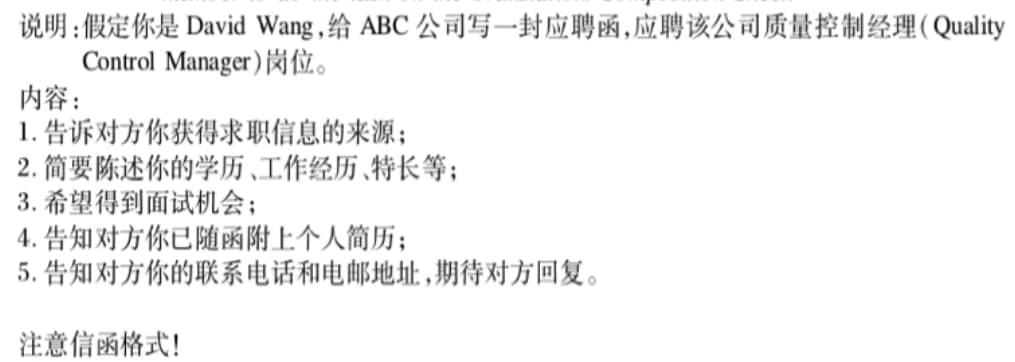
- I have learnt/learn that 从句
<我得知…>
you are looking for/seeking a Quality Control Manager from your website/from my friend.
<我从 我的朋友那里/你们的网站上 得知你们正在招聘一名质量管理经理>
2.I am graduated from…and majored in Quality Control/and my major is quality control.
<我毕业于…和主修质量控制专业/我的专业是质量控制>
I have worked as a part-time cashier during my college./I have a part-time working experience to design logo for small business.
<我在大学期间做过兼职收银员/我有一个为小企业设计标志的兼职工作经验>
3.I am good at management and designing pictures./I can speak and write English.My GPA is A + and I am good at communication/office work.
<我擅长管理和设计图片/我会说英语和写英语。我的GPA是A +,善于沟通/办公室工作>
I really hope that 从句
You can offer me an interview opportunity.
<我非常希望你能给我一个面试的机会>
4.Enclosed please find my resume.
<随信附上我的简历>
5.You can contact me at 136888888 or 444783764@qq.com. I look forward to your reply.
< 您可以通过136888888或444783764@qq.com联系我,期待您的回复 >
整理:
Dear ABC Company,
I have learn that you are looking for a Quality Control Manager from your website.I am very interested in this position.
I am graduated from BITC and majored in Quality Control.I have worked as a part-time cashier during my college.
I can speak and write English.My GPA is A + and I am good at communication.I really hope that you can offer me an interview opportunity.
Enclosed please find my resume.
You can contact me at 136888888 or 444783764@qq.com. I look forward to your reply.
译文:
我从你们的网站上得知你们正在招聘一名质量管理经理。我对这个职位很感兴趣。
我毕业于BITC,专业是质量控制。我在大学期间做过兼职收银员。
我会说英语和写英语。我的GPA是A +,善于沟通。我非常希望您能给我一个面试的机会。
随信附上我的简历。
您可以通过136888888或444783764@qq.com联系我。我期待你的回复。
Yours sincerely,
David Wang
招聘广告
.jpg)
写作思路:
1.company introduction/profile<公司介绍>
2.position vacancy<岗位空缺>
3.responsibilities<岗位职责>
4.requirement/qualifications<职位要求>
5.how to apply/deadline<如何申请>
Welcome to Join Us
1.ABC company focuses on ads for years.ABC company is a small company with bright future.
<ABC公司多年来一直专注于广告。ABC公司是一家很有前途的小公司>
2.ABC company looking for young pepole join us to work together. / ABC company is developing fast and we welcome talented young pepole to be part of us.
<ABC公司正在寻找年轻人加入我们一起工作/ABC公司正在快速发展,我们欢迎有才华的年轻人加入我们>
3.Two Product Marketing Managers are needed,based in Beijing.
<需要两名产品营销经理,常驻北京>
4.Job content:(1)to work with marketing team(2)to provide assistance in sales negotiation.(3)to be responsible for file management.
<工作内容:(1)与市场团队合作(2)协助销售谈判(3)负责文件管理工作>
5.Requirement:(1)college graduate(2)3 year work experience is prefered(3)good English skills in speaking and writing
<(1)大学毕业生(2)3年工作经验者优先(3)良好的英语听说读写能力>
6.Please send your resume to ABCcompany@163.com before July 10th. Please note that the subject field of your email must include “Marketing Manager Job”.
<请于7月10日前将简历发送至 ABCcompany@163.com。请注意,邮件主题必须包括“营销经理职位”。>
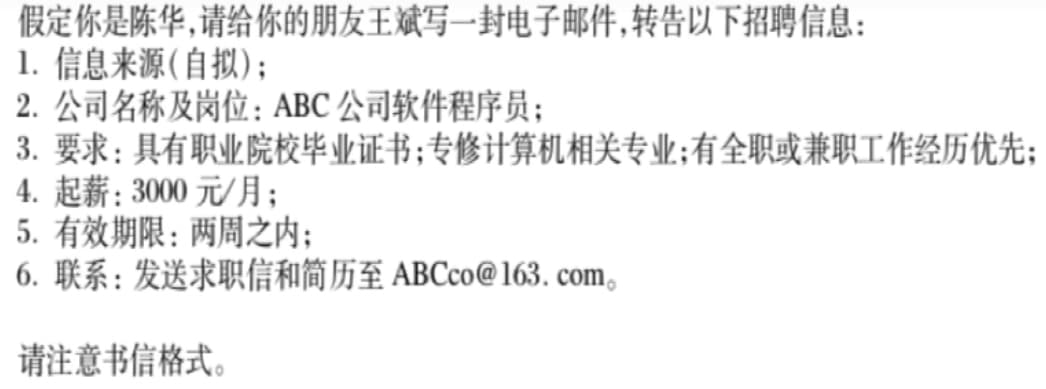
Dear Wang,
How are you recently?I know that you are looking for a job,and I learnt that ABC company is looking for a computer software engineer.
<最近好吗?我知道你正在找工作并且我听说ABC公司正在招聘计算机软件工程师>
The job requires a college diploma and computer-related majors.Part-time or full-time job experience is preferred.The starting salary is 3000 Yuan and this is only valid for two weeks.
<这项工作需要大学文凭和计算机相关专业。有兼职或全职工作经验者优先。起薪3000元,有效期只有两周。>
if you are interested in this job,please send your resume and cover letter to ABCco@163.com. Good luck
Best regards,
Chen Hua
<如果您对该职位感兴趣,请将您的简历和求职信发送到 ABCco@163.com >
信
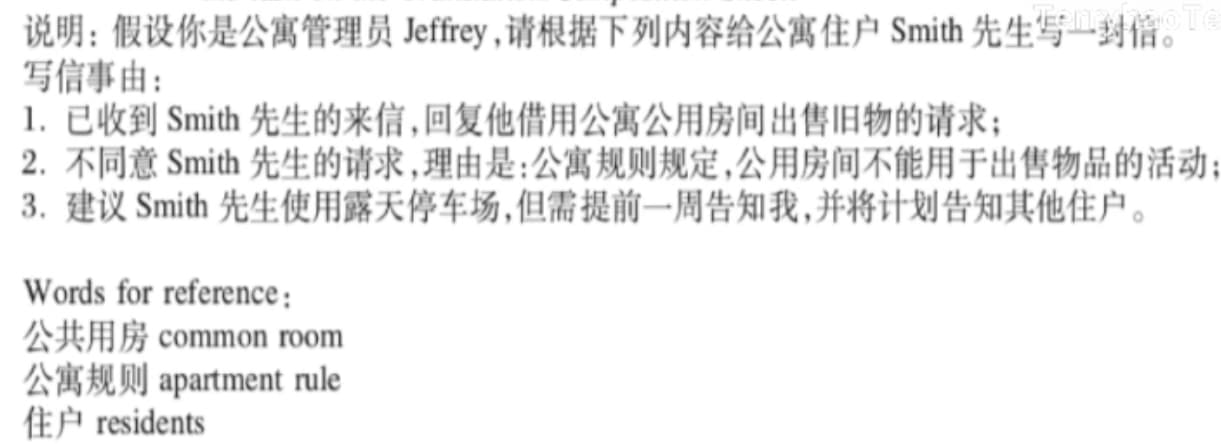
Dear Mr.Smith,
I have received your letter,in which you asked to sell your old stuff in our common room of the apartment.
<我收到了你的信,你在信中要求卖掉你在我们公寓公共休息室里的旧东西。>
We are sorry we don’t agree with you,because the commom room cannot be used to do selling.
<很抱歉,我们不同意你的意见,因为公共休息室不能用来卖东西。>
We advise that you use the open-air parking lot to sell things. You should tell me about it a week in advance. You should also tell other residents about it.
<我们建议你使用露天停车场来卖东西。你应该提前一周告诉我。你也应该告诉其他居民。>
Apartment Manager,
Jeffrey

Dear Johnson,
I have received the sales report of the first half of year.
<我已经收到了上半年的销售报告。>
I have learnt that the product sales fell by 20% and even 50% in some areas,mainly because of the design of our products.
<我了解到一些地区的产品销量下降了20%,甚至50%,主要是我们产品的设计问题。>
A department manager meeting will be held next Monday. The sales department is expected to propose a plan to improve the sales.
<下周一要开部门经理会议。期望销售部门提出一个提高销售额的计划。>
If you have any questions,please contact me.
<如果您有任何问题,请与我联系。>
Best Regards,
Sim
General manager
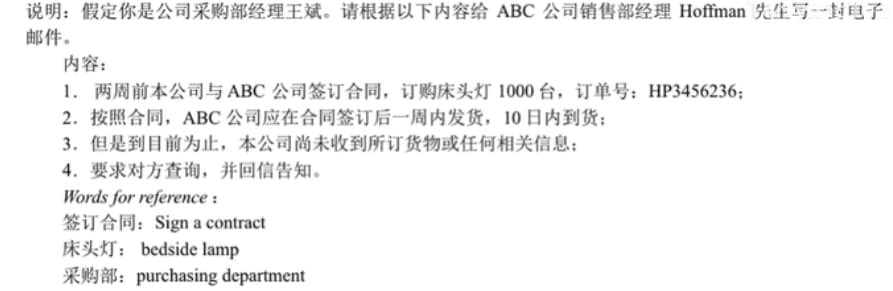
Dear Mr.Hoffman,
I am Wangbin from Purchasing department company. Our company signed a contract with ABC company to buy 1000 bedside lamp in 2 weeks ago.The order is NO.HP3456236.
<我是采购部公司的王斌。我们公司在两周前和ABC公司签订了购买1000盏床头灯的合同。订单号是NO.HP3456236>
According to the contract,the goods should be delivered in a week and arrive in 10 days.
<根据合同,货物应在一周内交货,10天内到达。>
However so far we haven’t received the goods or any information about it.
<但是到目前为止我们还没有收到货物,也没有收到任何有关货物的信息。>
Would you please look into it and reply to us as soon as possible.
<请你调查一下并尽快给我们答复。>
sincerely your,
Wangbin
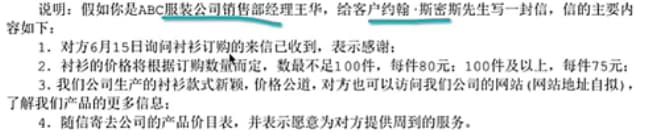
Dear Mr.Smith,
I am Wanghua from Sales department of ABC company.
<我是ABC公司销售部的王华。>
Thank you for your letter dated June 15,in which you inquire about the shirt order.We are so happy to receive your inquire about it.
<谢谢你方6月15日来函询问衬衫订单事宜。我们很高兴收到您的询问。>
The price of shirt depends on how much you order. If you buy less than 100 pieces,the price is 80 Yuan Per piece. If you buy more than 100 pieces,the piece is 75 Yuan Per piece.
<衬衫的价格取决于你订多少。如果您买不到100件,价格是80元一件。如果您买100件以上,每件75元。>
Our shirts are fashionable and our price is reasonable. Please visit our website to know more about products.
<我们的衬衫很时尚,价格也很合理。请访问我们的网站了解更多产品。>
We send you price list with this letter.
<随信寄上价目表。>
We are ready to serve you.
<我们随时准备为您服务。>
投诉
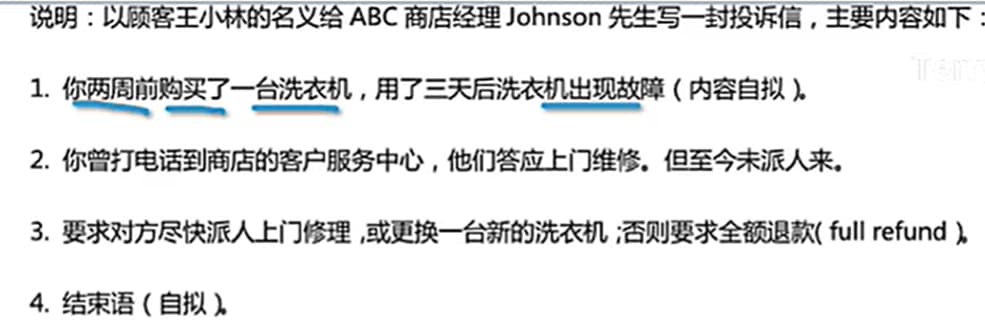
Dear Johnson,
I bought washing machine 2 week age,but something is wrong with it three days later.It made very big noise.
<我两周前买的洗衣机,三天后就出了毛病。它发出很大的噪音>
I called the service center and they promised to repair it by coming to my house.
<我打电话给服务中心,他们答应到我家来修理。>
so far,they haven’t send anybody.
<到目前为止,他们还没有派人来。>
Would you please send someone to repair it or replace it with a new one? Otherwise,I ask for a full refund.
<请你派人来修一下,或者换一个新的好吗?否则,我要求全额退款。>
I look forward to your early reply.
<我期待你的早日答复。>
Wang Xiaolin
注意
内部沟通类
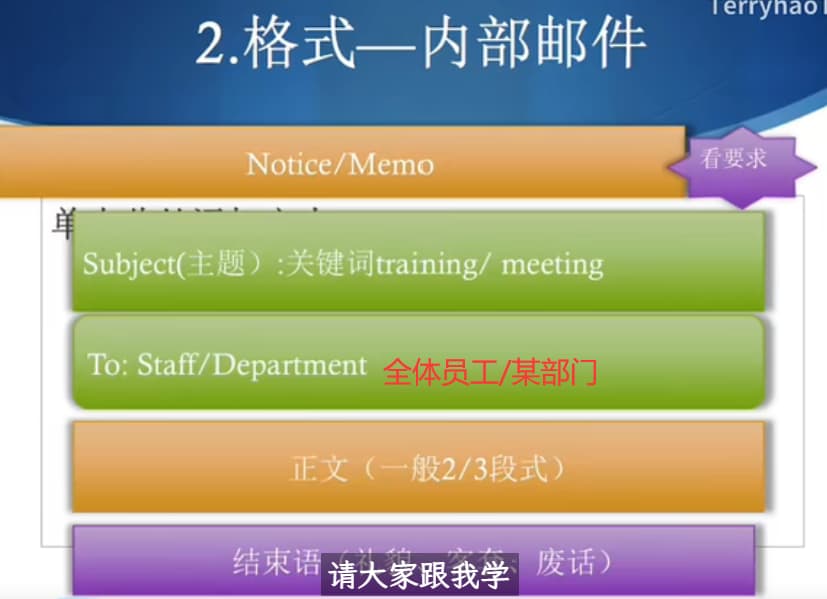
开头:
We are going to hold a meeting/training/video conference +时间+地点
and you are expected(required/invited) to attend it on time.
<我们希望(要求/邀请)你准时参加。>
结束:
If you have any questions/need any help, please contact us.
<如果您有任何问题/需要任何帮助,请与我们联系。>
If you cannot attend the meeting, please tell us in advance.
<如果你不能参加会议,请提前告诉我们。>
外部沟通类
常见词汇